

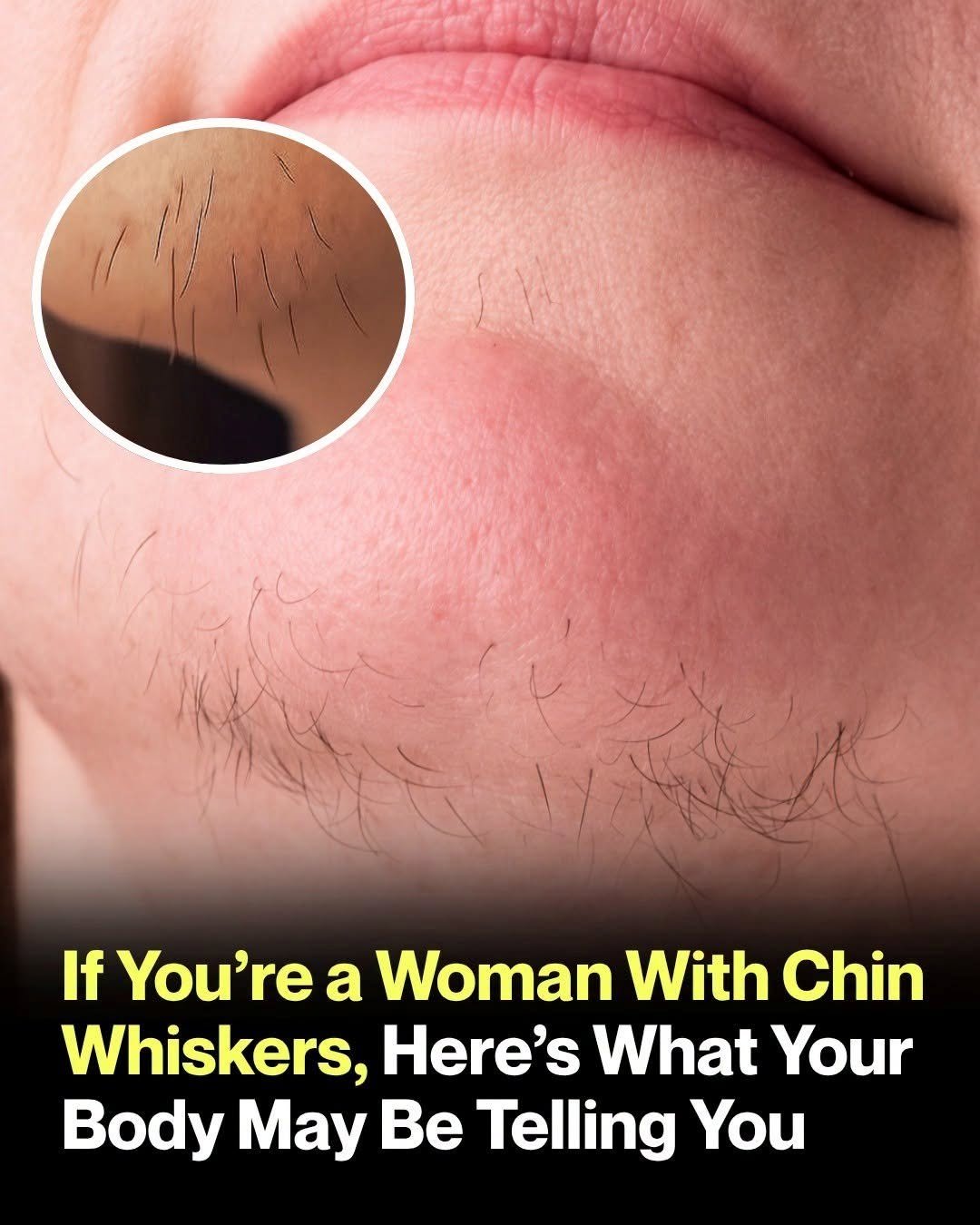
2. Aging And Menopause Can Make Chin Hair More Noticeable
For many women, chin whiskers seem to appear almost out of nowhere in their 40s, 50s, or beyond.
Hormonal changes associated with perimenopause and menopause may help explain why.
As estrogen levels decline, the balance between estrogen and androgen activity changes. Even without a dramatic increase in testosterone, androgen effects may become relatively more noticeable.
The result can be an interesting contrast: hair on the scalp may become thinner while a few coarse hairs begin appearing around the chin or upper lip.
Cleveland Clinic notes that new or increasing chin hair can occur during the menopause transition as estrogen declines and testosterone has a relatively stronger effect.
So if you are approaching or have gone through menopause and have gradually developed a few chin hairs, this can be a common age-related change.
Again, gradual is an important word.
Rapid or extensive facial-hair growth should not automatically be blamed on menopause.
